

complexity of a printed circuit assy
In the intricate landscape of electronic design and manufacturing, the number of layers in a Printed Circuit Assy (PCA) serves as a fundamental determinant of its complexity, functionality, and performance. Understanding how layer count influences these aspects is essential for engineers, designers, and manufacturers seeking to navigate the nuances of electronic innovation and optimization.
At its core, the number of layers in a printed circuit assy directly correlates with its capacity to accommodate complex circuit designs and routing requirements. Single-layer PCBs, characterized by a single layer of conductive traces on one side of the substrate, offer simplicity and cost-effectiveness but are limited in their ability to support intricate circuitry or densely populated components. In contrast, multilayer PCBs feature multiple layers of conductive traces interconnected through vias, enabling greater routing flexibility, higher component density, and enhanced functionality within a compact footprint.
The complexity of a Printed Circuit Assy increases exponentially with the number of layers, as each additional layer introduces new opportunities for circuitry optimization, signal routing, and component placement. Multilayer PCBs can support a diverse range of electronic systems, from simple consumer electronics to advanced computing devices, telecommunications equipment, and aerospace systems, by providing the necessary platform for integrating complex functionalities and accommodating high-speed signal transmission.
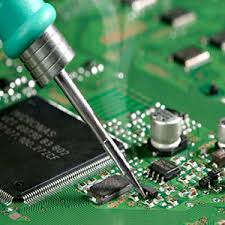
how does the number of layers affect the complexity of a printed circuit assy?
Moreover, the number of layers in a Printed Circuit Assy directly impacts its signal integrity and electromagnetic compatibility (EMC) characteristics. High-speed digital signals, such as those used in data transmission, require careful consideration of signal integrity to minimize signal degradation, noise, and electromagnetic interference. Multilayer PCBs offer advantages in this regard by allowing for the separation of signal and power planes, controlled impedance routing, and optimized signal paths, thereby ensuring reliable signal transmission and reducing the risk of data corruption or transmission errors.
Furthermore, the number of layers in a Printed Circuit Assy influences its thermal management capabilities and heat dissipation efficiency. As electronic components continue to shrink in size and increase in complexity, thermal management becomes increasingly critical to prevent overheating and ensure the reliability and longevity of electronic devices. Multilayer PCBs enable the integration of thermal vias, heat sinks, and thermal planes, which help dissipate heat away from heat-generating components and distribute it evenly throughout the PCB, thereby mitigating thermal hotspots and improving overall thermal performance.
Additionally, the number of layers in a Printed Circuit Assy affects its manufacturability, cost, and time-to-market. While multilayer PCBs offer advantages in terms of complexity, functionality, and performance, they also present challenges in terms of manufacturing complexity, fabrication cost, and production lead times. The manufacturing process for multilayer PCBs involves multiple sequential steps, including layer stackup design, lamination, drilling, plating, and etching, each of which adds complexity and cost to the manufacturing process.
In conclusion, the number of layers in a Printed Circuit Assy profoundly influences its complexity, functionality, and performance across diverse applications and industries. Multilayer PCB technology offers unparalleled advantages in terms of circuit density, routing flexibility, signal integrity, thermal management, and design scalability, enabling engineers, designers, and manufacturers to push the boundaries of electronic innovation and unlock new opportunities for technological advancement. As technology continues to evolve, the role of multilayer Printed Circuit Assemblies will undoubtedly remain pivotal in driving progress and innovation in the digital age.