

Commonly Use Electronics Board
The electronics industry relies on circuit boards to connect all of the components in their products. They’re used in computers, tablets, smartwatches, and even cars. Many people don’t realize that their devices would not function without them, but a single circuit board is at the heart of every piece of technology we use.
Printed circuit boards (PCBs) are flat, flexible, and made from insulating material. They can be constructed of single-layer, double-sided, or multi-layer copper. Single-layer PCBs are the most common and are found in small appliances like radios and printers. Multi-layer copper PCBs are used in more complex applications such as electronic calculators and industrial controls.
A PCB is etched with a pattern that corresponds to the component connections on a schematic, or the “artwork.” The artwork is applied using photoresist that’s coated onto the copper layer of the electronics board. The resist material protects the copper from dissolving into an etching solution. The insulating material is known as pre-preg and can be produced in various forms such as FR-4 glass epoxy, phenolic cotton paper, or a woven glass and epoxy blend. The thickness of the pre-preg determines its insulating properties.
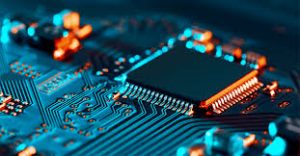
What Industries Commonly Use Electronics Board?
There are also various dielectrics that can be chosen to provide different electrical characteristics, such as impedance vs frequency. This parameter indicates how well the PCB can transmit electrical signals over a wide range of frequencies. The track and field resistance parameters are important as well, as they indicate how well the circuit board can retain its shape and resist high voltage electrical discharges.
The components that can be mounted on the PCB include passive components such as resistors and capacitors that regulate current flow; active components such as integrated circuits, transistors, and diodes that perform signal processing and convert electrical signals into actions; and connectors to connect the circuit to other wires or devices. Some of these components are inserted through holes on the surface, while others are glued with solder to hold them in place. The solder also acts as an insulator to prevent shorting or grounding.
Almost all modern electronics contain circuit boards, and the demand for these items is only growing as we become more connected to our devices. Consumers are demanding more and more features in their electronics, including advanced computer systems. To ensure these features work properly, they rely on quality PCBs.
In the business world, the telecommunications industry uses powerful PCBs to transfer massive amounts of data. These boards are also used in medical equipment such as pacemakers and heart rate monitors.
The automotive industry depends on electronic components to make our vehicles safer and more efficient. PCBs are critical for vehicle navigation, in-car entertainment, and safety devices. The rigors of the environment inside a car, including vibration and extreme temperatures, require the use of robust and reliable PCBs that can handle these conditions.
Many people are starting to take their health and fitness seriously, and a PCB is an essential component in many of these devices. Whether it’s a heart rate monitor or a wearable fitness device, a quality PCB is necessary to ensure these devices are safe and effective.